Showing posts with label self-examination. Show all posts

Friday, October 7, 2016

Not of This World


If the followers of Christ are to focus on the heavenly kingdom, why do we try so hard to make one here on earth?

The United States, as the story goes, began simply as the result of a boat of Christian pilgrims seeking freedom from the oppression of the state-run church in Europe. They then formed a Christian nation that promoted Christian values. I say "as the story goes" because such a statement only tells part of the story. This misremembering of history comes from a belief in "The United States is a Christian Nation" myth. (For more details on how this myth became official, read a previous post). This myth of a Christian nation has led, and continues to lead, to all sorts of persecution and subjugation of non-Christian and Christian people alike simply because they believed differently than those in power.

Beliefs Then and Now


This persecution and subjugation has taken many forms in American history. From early on, the Puritans persecuted dissenters from their colonies, notably Roger Williams, the future founder of Rhode Island. He wrote,
"God requireth not an uniformity of Religion to be inacted and inforced in any civill state; which inforced uniformity (sooner or later) is the greatest occasion of civill Warre, ravishing of conscience, persecution of Christ Jesus in his servants, and of hypocrisy and destruction of millions of souls." (source link here)
Such "inforced uniformity" most likely came from the belief that in order for Jesus Christ to return, God must have a pure people, and it behooves governmental authority to be the key agent of this purification. Often referred to as postmillennialism, an adherent to this view
"[B]elieves that the millennium is an era (not a literal thousand years) during which Christ will reign over the earth, not from an literal and earthly throne, but through the gradual increase of the Gospel and its power to change lives. After this gradual Christianization of the world, Christ will return and immediately usher the church into their eternal state after judging the wicked. This is called postmillennialism because, by its view, Christ will return after the millennium." (source link here)
To find a notable proponent of a form of postmillennialism called dominionism, one need look no further than former presidential hopeful, and current Texas senator, Ted Cruz. (A more in-depth look at his views can be found here) Dominionism promotes, among other things, a Christian-controlled government in the United States. While few talk so openly about their belief in this concept as he and his family, its pervasiveness can readily be seen. One finds a clear example of this pervasiveness in the reaction of many professed Christians to the United States Supreme Court ruling on marriage equality.

Going the Wrong Direction


Such a ruling went directly against the goal of the "gradual Christianization of the world" which caused a lot of consternation in certain Christian circles (because many believe that the nation cannot be Christian if same-sex couples are allowed to be married). However, instead of renewing a zeal to preach the gospel, the ruling renewed a zeal to pass laws at the state and local levels to restrict this newly found freedom. Laws such as these, often passed under the guise of establishing religious liberty, tend to backfire in the long run. Many people now equate the terms "religious liberty" and "religious freedom" with intolerance and bigotry, and actively pursue means to erode the legal foundation for such laws (for more explanation of this issue go here).

To those who may think that I'm painting with too broad of a brush, answer this question for yourself, when you see society's morals eroding away, is your first reaction to find a spiritual solution or a political one? Spiritual solutions bring people together, political solutions drive people apart. I write this post because I have seen too many well-intentioned Christians heading in a direction that draws them away from God.


Jesus' Example and Rejection


As Christians we need to follow Christ, and a careful look at Scripture shows no occasion where He used political power to spread the gospel. After Jesus fed the multitude as recorded in John 6, the people wanted to make Him king, by force if necessary. Jesus recognized their intentions, but instead of accepting this political role, He withdrew from their presence (see verses 14 & 15). Prior to His crucifixion, Jesus told Pilate, "My kingdom is not of this world. If it were, my servants would fight to prevent my arrest by the Jewish leaders. But now my kingdom is from another place." (John 18:36) 

The common people who rejected Jesus as the Messiah wanted a political leader to deliver them from pagan Roman oppression. The religious leaders had another reason. John 11:47-48 states, 
 "Then the chief priests and the Pharisees gathered a council and said, 'What shall we do? For this Man works many signs. If we let Him alone like this, everyone will believe in Him, and the Romans will come and take away both our place and nation.'" 
They did not want to lose their favored status with the government. Sound familiar?
 

The Bottom Line


Religion and politics should be coworkers, not marriage partners. Whenever religion uses politics to achieve its goals, it not only goes against the example of Jesus, but also alienates the very people God said we need to reach.

Monday, April 6, 2015

Fighting the Bad Fight

Christianity's ongoing battle with atheism and secularism is not only misguided, but also not what God intended for His church.

I recently heard a story about the evangelist Billy Graham. What piqued my interest was how almost overnight he transitioned from relative unknown to household name. One day he showed up to the tent where he was holding a series of meetings and discovered a gaggle of news reporters who were eagerly writing down everything he said. When he inquired as to what caused all this interest, he discovered that he had caught the eye of media mogul William Randolph Hearst, and the rest, as we say, is history. Mr. Hearst never divulged the reason for his interest in Graham, but the historian who was telling the story stated that it had a lot to do with current world events, namely the rise of communism as a world power.

You see, the Soviet Union had successfully test fired a nuclear bomb, and Mao Zedong had recently taken over China. Communism now posed a real threat to the American way of life, or at least that is how many perceived it. Atheism being one of the main tenets of Communism, a key way to fight against it was a revival of religion in the United States. Hearst most likely saw in Graham a person who could spearhead such a revival. This revival that Graham participated in came about in a large part as a means to counteract the perceived encroachment of atheistic communism. Religion (i.e. the Judeo-Christian belief system) was essentially a weapon meant to ward off those who would seek to undermine American ideals.

The popularity of "this Christianity as a weapon" concept has in a large part caused the downfall of true Biblical Christianity because it has made the religion popular again on a grand scale. Christianity was never meant to be popular. The Roman emperor Constantine's supposed conversion did more damage than all the persecution up to that point because by making Christianity popular it brought in a sense of entitlement. This sense of entitlement causes adherents to the religion to do whatever it takes to preserve their popularity, including countless atrocities committed in the name of God, but more subtly it causes Christians to be on the continual lookout for battles to fight as a means of promoting the Christian brand.

One can hardly escape hearing about some ideological battle that Christians are fighting: creation vs. evolution, the "War on Christmas", abortion, gay marriage, the list goes on and on, all the while neglecting Jesus' words and example to the contrary. A prime example is His declaration to "be of good cheer, for I have overcome the world." That's right, Jesus said that He has overcome the world, meaning that we don't have to, so why do we insist on trying to accomplish such a feat?

When Jesus was on the earth, His focus was on relieving people from religious oppression, not secular oppression, so why do His professed followers focus so much on the secular aspect? The simple answer is that it is easier to look out than to look within. Personal attacks are much easier to accomplish than personal growth because growth requires sacrifice, and sacrifice is uncomfortable. Despite the fact that Jesus sacrificed not only His comfort, but also His very life, we would rather give up as little as possible and attack those who threaten our comfortable way of life.

You can probably see where I'm going here. For multiple reasons, the professed followers of Christ have decided to go against His teachings and as a result are trying to compensate for the church's shortcomings by attacking those outside of the church; the very ones Jesus told us we should be trying to reach.

Now is high time for Christians to stop fighting the bad fight of unbelief and start fighting the good fight of faith, and see what wonders God will work in our lives and in the lives of others.

Monday, January 19, 2015

Ich Bin Adolf?

Adolf as a Child, Courtesy: wikipedia.com
Genocidal dictators aren't born, they're created, and they started out being a lot like you and me.

I recently viewed a documentary on the beginning of World War II, which of course talked a great deal about Adolf Hitler, and a somewhat disturbing thought came to mind; Adolf was once a regular person. Curious as to whether the facts support this thought or not, I did a little research.

A Regular Person

According to the United States Holocaust Memorial Museum, Adolf was born into a middle-class Catholic family. He pursued a career as an artist despite his family's insistence that he join the army. After his parents died, he bounced around quite a bit, supporting himself with his art until eventually joining the army in World War I. Most importantly, up until the end of WWI, his racism was nothing extraordinary, keeping in line with much of the general public at that time.


A Single Step

At this point you may be asking yourself, "What does this have to do with me? I'm nothing like Hitler." Sure, almost nobody goes to bed a law-abiding, tolerant person, and then wakes up a hate-filled mass-murderer. It's a process that one goes through. As the saying goes, the journey of a thousand miles begins with a single step. Many times that single step is a step in the wrong direction.

Jesus stated in His famous Sermon on the Mount that thoughts have the same weight as actions because thoughts are that first step. One does not set out to murder without first nurturing hatred to a person or group of people. Young Adolf got caught up the wrong crowd that encouraged the negative parts of his character, and the rest, as they say, is history. Sadly, history has a way of repeating itself.

Swimming Against the Current

Even one with only a passing knowledge of current events can see that there is a lot of hatred going around. Aside from those atrocities that make the national and international news, people are being killed everyday simply because they are different. Beyond that, the world-wide web often becomes a forum for people to spew hate-filled diatribes against those who simply disagree with their views. With hatred such as this being so prevalent, it's easy to allow yourself to go with the flow. In order to not be changed by that hate, one must swim against the current of popular opinion, even when that popular opinion has seemingly good intentions.

No God Zones

In a must-read article on the British website the Telegraph, Cristina Odone voices her valid concern about the potential creation of "no God zones" in which no public religious display will be allowed because such display might provoke an attack. The discrimination would be for their own protection. She continues by pointing out those who have taken steps in the wrong direction.
Secularists once sought only a separation between Church and State; today they want to purge all signs of religion from all public space: the staff at Charlie Hebdo said they did not want to hear the bells of Notre Dame mourning their colleagues’ murders. Salman Rushdie weighed in, saying religion, as a "maedieval form of unreason", is the enemy.
Instead of simply religious extremists being the problem, religion itself becomes the problem, and it doesn't take much imagination to see where that mindset can take you.

The Right Path

Young Adolf took such a mindset to the next level and ended up being one of the most reviled people in history. He kept nurturing that hatred until it controlled him. There is no room for such hatred in the Christian, even in small amounts. So I challenge you to make the right choices, to choose the right path. Such a choice will be difficult, but remember this, you can do all things through Christ Who gives you strength.

Monday, July 14, 2014

Just A Game?

Courtesy blog.apimages.com
Why people, especially Christians, should rethink how they view sports.

They stood in stunned silence, some openly wept, while others cried silently. An elderly man comforted a small girl. Many who saw the event on television left the room in tears, unable to bear the sight. What had these people seen? A terrorist attack? A mass shooting? The assassination of a beloved dignitary? Sadly, none of the above. They witnessed the Brazilian football (soccer) team lose badly in the quarterfinals of the World Cup.

There was one picture of a woman that pushed me over the edge. Seen out of context one would have thought that she had received the news that her child had been brutally murdered. I thought that something is out of control here, something must be done. Therefore I decided to write this post because as the saying goes, better to light a candle than simply curse the darkness. The following are a few reasons why I think that people, especially Christians, should rethink how they view sports in general.

Loss of Perspective

I put this one at the top of the list because it provides a foundation for all the other issues. Sports easily becomes the highest priority in people's lives. So that if our favorite team or individual wins or loses, we win or lose. Everything else becomes less important then the game or match. Vince Lombardi, a famous coach of American football is quoted as saying, "Winning isn't everything. It's the only thing." Such an attitude goes completely against one of the primary tenets of Christianity (as well as Judaism) which is "Love the Lord your God with all your heart and with all your soul and with all your mind." God should be the primary focus in a person's life, anything that tries to take one's focus off of God should be avoided.

Waste of Time/Money


It's no secret that there is a lot of money in sports. CNBC reported that Brazil spent over 11 billion dollars (US) on its preparation for the latest World Cup. Sadly, such spending is not too far from normal. Alongside the massive spending of major organizations comes the individual spending of those who watch the games and/or buy sport-related merchandise. In a world with so much need on so many levels, can we honestly say that God is happy when we spend money on things that merely entertain ourselves?

Some may say that they don't spend any on sports. They don't buy merchandise, go to games, or even host game-watching parties, they simply watch the games for free. However, in so doing, they spend a much more valuable resource, time. Money spent can be earned back, but time spent is lost forever. Again, how can God be happy when we spend time on things that merely entertain ourselves?

Us versus Them

Finally, sports creates an "us vs. them" mindset with our favorite team being against your favorite team, and ultimately me against you. I've written on this mindset before (here and here), so I won't go into much detail other than to say that I have experienced this first hand both in person and via social media. What makes this worse is that all the people involved in the confrontations, taunting, and general unChristlike behavior I witnessed claimed to be followers of Christ. People already talk too much about the hypocrisy of Christians, do we really need to add fuel to the fire?

Think About It

I hope this post has gotten you thinking. What we see and do ultimately affects who we are. Do we really need to spend so much time, energy, etc. on sports? I'll let you come to your own conclusion on the matter. I hope that you come to the right one and start living a life less influenced by the sporting world.

Monday, April 14, 2014

Prosperous Followers of a Humble God

Courtesy hellemanworld.blogspot.com

Although still far from the ideal, when it comes to living simple lives, the leaders of the Roman Catholic Church and their Evangelical counterparts seem to be going in different directions.


An Early Contrast


A favorite story of mine from the Protestant Reformation talks about an anonymous painter who painted what could be considered an early form of a political cartoon. The painting made a comparison between the "Triumphal Entry" of Jesus and a papal procession. As many of you know the "Triumphal Entry" was the time when Jesus entered Jerusalem shortly before his crucifixion. At that time, Jesus rode in on a borrowed donkey wearing his relatively simple clothes while the people honored him by waving palm branches (from where we get the term "Palm Sunday"), and placing some of their clothes on the path in front of Him. Alongside this depiction, the painter showed a customary medieval papal procession with the many cardinals and bishops in their rich robes astride highly-adorned show horses surrounding the pope on a decorative cart wearing his tailor-made robe and golden triple-miter crown.

Papal Reforms


A lot has changed from those days when the papacy seemed quite content to show everyone how much riches and wealth it had acquired. With the installation of the newest pope, the papacy has taken a different tack in appealing to the masses. Much has been written regarding Pope Francis' aversion to pomp and extravagance, so I will not rehash the details other than to say he goes to great lengths to at least appear to be like one of us. The pope strives to apply this philosophy to all levels of Roman Catholic leadership, and led to the resignation of the infamous "Bishop of Bling", as well as an apology from an Atlanta, Georgia archbishop who built a $2.2 million Tudor-style mansion for himself. No such apologies will be coming from Evangelical leaders here in the United States. In fact, one would get quite the opposite response.

Proponents of Private Prosperity


In case you haven't already figured it out, I'm referring to proponent of the so called "Prosperity Gospel" or "Prosperity Theology". Wikipedia defines the belief in this way.
". . . a Christian religious doctrine that financial blessing is the will of God for Christians, and that faith, positive speech, and donations to Christian ministries will always increase one's material wealth. Based on non-traditional interpretations of the Bible, often with emphasis on the Book of Malachi, the doctrine views the Bible as a contract between God and humans: if humans have faith in God, he will deliver his promises of security and prosperity. Confessing these promises to be true is perceived as an act of faith, which God will honor."
What makes this even more interesting is that many of the major organizations that promote such theology are registered in the United States as a "church" which not only gives them tax-free status, but also frees them from any legal obligation to disclose how they use money that they receive. (This is compared to being registered as a "religious organization" which still allows them to be tax-free, but they would have to file an IRS Form 990 to disclose their financial information.) Some Christians went even further and formed the Evangelical Council for Financial Accountability (EFCA). Accreditation with the EFCA gives a church or non-profit an opportunity to be even more transparent because members are listed on its website. (In case you are wondering which organizations do what, you can view a list of the thirty leading religious broadcasters here.) Sadly the majority of these "churches" shun transparency which leaves many wondering what they have to hide, and which God they truly follow.

A Much Different Picture


More importantly, which God do we follow? The humble itinerant preacher who had no place to call home, or the God who supposedly states that we should get as much wealth on earth as we possibly can? Although we may shake our heads in disbelief at these examples of extravagance, do we secretly wish that we had more money and possessions? Do we strive to be comfortable or seek to sacrifice? If a painter were to paint a picture of our life in comparison to the lives of the majority of today's society, how would we compare?

Monday, April 7, 2014

Whose Side Are We On?

Courtesy unboxedwriters.com
Do Christians unintentionally do the devil's dirty work in promoting movies that tell lies about the character of God?

Have you ever had one of those moments in which it seems as though a topic you've been pondering for some time suddenly becomes clear? In case you're wondering what to call that moment, it's called an epiphany, and I had one recently in regards to Christianity's relationship to movies. Let me share with you the thought processes that led up it.

Negative Publicity


Many Christians made a big deal about the recently shown movie "Noah" and its apparent disregard for the biblical story of the same name. Not surprisingly, it ended up being the top movie by a large margin in terms of money generated for that weekend.  That last bit of news got me thinking as to if all the negative talk about that movie actually increased ticket sales somewhat as people wanted to see the source of all this controversy for themselves. I have heard that in Hollywood there is no such thing as negative publicity, and while we may never know for certain if that was true in this case, it did give me food for thought. However God can also be misrepresented in a different way, so to help round out the picture lets look at a movie which Christians viewed quite differently.

Son of a Different God


The movie "Son of God" based off of "The Bible" miniseries shown on the History Channel, depicts the story of Jesus Christ, and its creators apparently planned to have many people watch this because in some of it trailers display a number to call and purchase group tickets. This movie generated no negative publicity that I am aware of, and although it brought in much less money in its opening weekend ($25.6 million vs. $43.7 million) than "Noah" is still doing quite well for itself. The problem with "Son of God" comes from its creators going to the opposite extreme than those who put "Noah" together. One reviewer put it this way.
"If the producers only wished to film a good story, that would have been okay. After all, the life, death, and Resurrection of Jesus Christ really make a wonderful narrative, made all the more wonderful because it is true. But the producers have declared their wish that the movie and the miniseries would reach many people with the Word of God. Films can do that, and—while I hope this one does—I fear that biblically illiterate viewers will see nothing in the movie to help them understand how Jesus’s death should benefit them. Though grossing well at the box office, it remains nothing more than a fairly incomplete depiction of Christ as a happy smiling wandering miracle worker that made some downtrodden people feel good about themselves."

Smear Campaign


By emphasizing such extreme views of God and His teachings, many "biblically based" films lead many to adopt distorted views about God. It becomes so difficult to reconcile the extremes that many people simply choose the extreme that suits them best. God either becomes so vindictive that one cannot reason with Him, or so passive that one need not worry to disobey what He tells us to do. The devil is happy for us to believe either one of these lies because both fall under his smear campaign against God, and is even happier when God's professed followers do their best to spread these lies to all their friends and family.

The Christian's Response


So how should Christians deal with such movies? We cannot simply bury our heads in the sand and pretend biblically incorrect movies don't exist (and they do generate some witnessing opportunities), but at the same time we shouldn't spend so much of our time and energy on these films that we don't have the time or energy to devote to worthier causes. So next time a professedly Christian film starts generating some buzz, be careful that the cause you promote is of heavenly, and not diabolical, origins.

What do you think of this viewpoint? Be sure to share your views in the comment section.

Sunday, December 22, 2013

[Devotional] Ready for Christmas

Here's another great devotional whose message, if taken to heart, should help us keep Christmas in proper perspective.


Ready for Christmas
by Sharon Jaynes

Today’s Truth

"Repent, for the kingdom of heaven is near." (Matthew 3:2 NIV)

Friend to Friend

It seems like everywhere you go during the month of December people ask the same question. At the grocery checkout counter--"Are you ready for Christmas?" At the bank drive through window--"Are you ready for Christmas?" At the doctor's office--"Are you ready for Christmas?"

I think the answer to that question depends on how you define "ready." Let me ask you this question: "Are you ready for Jesus?" Now that puts the idea of being ready in a whole different Christmas light, doesn't it?

John the Baptist was sent by God to get the people ready to meet Jesus. Here's what Matthew had to say about him:
In those days John the Baptist came preaching in the Desert of Judea and saying, "Repent, for the kingdom of heaven is near." This is he who was spoken of through the prophet Isaiah:

"A voice of one calling in the desert,
'Prepare the way for the Lord; make straight paths for him.'"...

"People went out to him from Jerusalem and all Judea and the whole region of the Jordan. Confessing their sins, they were baptized by him in the Jordan River." (Matthew 3:1-3, 5-6).

We don't like the words "repent" or "repentance" very much. They mean "to make a radical change in one's life, to turn and go in the opposite direction from sin (another word we're not too fond of today) to God." Repentance involves an element of grief over the way we have lived apart from God and a decision to run toward the Father. That was God's idea of the way to prepare for Christ's arrival in the book of Matthew, and it is still God's idea of preparing to worship Him today.

Let's reflect for a moment on the words to this poem and then answer the question, "Are you ready for Christmas?"

"Ready for Christmas," she said with a sigh
As she gave a last touch to the gifts piled high...
Then wearily sat for a moment and read
Til soon, very soon, she was nodding her head.
Then quietly spoke a voice in her dream,
"Ready for Christmas, what do you mean?"
She woke with a start and a cry of despair.
"There's so little time and I've still to prepare.
Oh, Father! Forgive me, I see what You mean!
Yes, more than the giving of gifts and a tree.
It's the heart swept clean that He wanted to see,
A heart that is free from bitterness and sin.
So be ready for Christmas - and ready for Him.

Let's Pray

Dear Lord, I want to be ready for Jesus today and everyday. I come to You now in repentance for my sins: my sin of selfishness, stubbornness, and rebellion. I turn from my self-centeredness today and commit to keep my focus on You. God, I cannot do this on my own. I am not able. So I ask that you fill me with the power of Your Holy Spirit Who empowers me to obey. Thank You that You have given me every thing I need for a life of godliness and truth. Create in me a clean heart, O God, and renew a right spirit within me. In Jesus' name, amen.

Now It's Your Turn

What do you think it means to be "ready for Christmas?"

What do you think it means to be ready for Jesus?

Go back and read the parable of the ten virgins in Matthew 25:1-13. Notice the difference between the five who were ready and the five who were not. Which group more resembles your readiness for Christ?

Wednesday, December 18, 2013

[Devotional] Prepare the Way

Here's another Christmas devotional from Bible Gateway.  Enjoy.


Prepare the Way
by Nancy Guthrie

What happens at your house when guests are coming? Do you clean up things that are messy, fix things that are broken, make plans for how you will welcome your visitors? As God prepared to send his Son into the world, he sent someone to get things ready. He had promised to do that, so some people were watching for this special individual.

Two Old Testament prophets (Malachi and Isaiah) had prophesied that before the Messiah would come, God would send a messenger to prepare the people. Malachi wrote, "Look! I am sending my messenger, and he will prepare the way before me.... Look, I am sending you the prophet Elijah" (Malachi 3:1, 4:5). Isaiah had written, "Listen! It's the voice of someone shouting, 'Clear the way through the wilderness for the LORD! Make a straight highway through the wasteland for our God!'" (Isaiah 40:3). Mark recorded, "This messenger was John the Baptist" (Mark 1:4). Luke wrote, "He will be a man with the spirit and power of Elijah. He will prepare the people for the coming of the Lord. He will turn the hearts of the fathers to their children, and he will cause those who are rebellious to accept the wisdom of the godly" (Luke 1:17).

John the Baptist was the person God sent to prepare his people for Jesus. It wasn't food or beds that needed to be prepared; it was hearts. It was John's mission to call people to repent--to leave behind their sin and turn back to God. John prepared the people for Jesus by helping them get their hearts ready to receive him.

God knows our hearts need to be prepared to receive Jesus. During December we tend to get very busy preparing for Christmas with parties and programs and presents. But the most important preparation we need to make is to prepare our hearts to welcome Jesus in a fresh, new way. We do this by cleaning out the clutter of sinful attitudes and selfishness so that we look expectantly for Jesus to make himself known to us.

Prayer

Right now, Lord Jesus, our hearts are being prepared to receive you. Show us what must be removed, the sin that must be repented of, so that our hearts can fully receive you.

Wednesday, August 21, 2013

Unfinished Business

Courtesy wikipedia.com
There is nothing wrong with leaving a task unfinished.

This post continues along a similar theme as my last one in which I paused to consider accomplishing small tasks in favor of large ones.  Today I'm taking it one step further in asking you to consider accomplishing no task.  That's right, I'm talking about giving up.

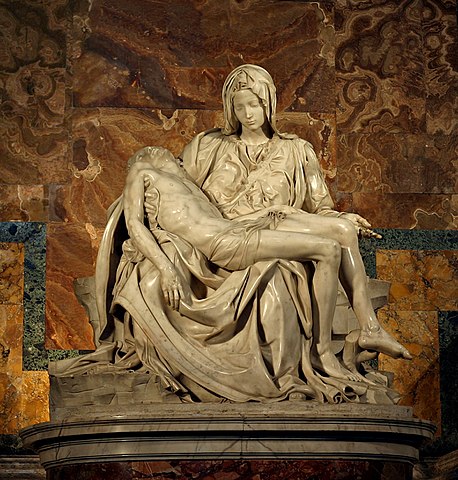
A long time ago, I came across a book about Michelangelo.  My favorite sculpture has to be the one picture above in which Mary cradles a recently crucified Jesus on her lap.  I marveled at how the folds and wrinkles in the fabric looked like actual folds and wrinkles in fabric and not in marble.  Then further along in the book I discovered something else altogether.  A collection of photographs of his many unfinished sculptures.  Yes, even someone as talented as Michelangelo gave up on a project once in awhile.

Michelangelo could have thought about all the time that he put into those sculptures, and finished them in order not to let that time go to waste, but he did not think that way.  The sculptures didn't go the way he wanted so he gave up on them and moved on to something else.  We can get a lot more accomplished if we follow a similar route.  Don't get me wrong, I'm not talking about giving up every time a project gets challenging.  However, I'm sure if we took a long, honest look at the projects we currently have on our "Unfinished Business" list, some of them could be erased with no real loss to our quality of life.

Let's face facts.  We only have a finite amount of time and ability to accomplish what we want/need to accomplish.  By giving up on some of the unfinished business in our lives it makes space to focus on other tasks and relationships.  The most important of these of course being our relationship with God.  We can rest from our unfinished business knowing that He always finishes what He starts, and what He finishes are always masterpieces.

Saturday, February 9, 2013

How Much Do We Care?

Courtesy latimes.com

Many people want those who do wrong to be brought to justice, but often neglect the greater need of those same people being brought to Jesus.

A friend of mine recently said in reference to the Christopher Dorner manhunt that he hopes that Dorner is brought to justice, but more importantly that he is brought to Jesus.  This statement carries some weight to it given that this friend has been a part of the law enforcement community for about eight years.  This poses an important question in my mind.  How much do we truly care about people who we deem to have gone too far?

In his manifesto, Dorner wrote that he believes the Bible to be mainly a work of fiction.  While I strongly disagree with that sentiment, in a way I can understand it.  Many supposed followers of Christ and the Bible do not follow His teachings found therein. Among other wrongs, Christians often fail to be positive examples for those who do not profess to follow Christ.  In simple terms, we do not practice what we preach.  We discriminate, we oppress, we stand idly by as injustice upon injustice is heaped upon those we deem less fortunate than ourselves.

God is not happy with injustice, and His followers should follow suit. We need to stand up for those who are being discriminated against.  We should seek to correct and prevent the wrongs caused by evil men and women, and this correction and prevention begins with us.  Instead of seeking revenge against those who have wronged us we should seek reconciliation.  If they reject our efforts, then at least we did our part.  Often this act of kindness may not only diffuse the current situation, but also prevent future ones.

We often view people such as Christopher Dorner who commit terrible crimes and reject Christianity as being too bad for God to love.   However, that could not be further from the truth because while we were still sinners, Christ died for us.  As the saying goes, "While there is breath, there is hope."  Let us not give up on others for God has not given up on us.

Friday, June 22, 2012

[Featured Post] The Price of Prejudice


Courtesy news.adventist.org
Many of us are a bit too young to remember when the Chamberlain case became worldwide news, but it serves as an illustration of the depths to which people can sink.

"You baby killer!" yelled the schoolboys at Julie as she walked to her Adventist School in Strathfeild in 1980. She ignored the taunts as she'd done every day since the Chamberlain case broke sensationally in the tabloids. But this time, as she walked, a half-full can of Fanta hurled by her head as the boys cheered.

Julie wasn't alone. Many Australian Adventists of the period have stories of harassment, from prank phone calls to public abuse. The hatred that underpinned the anti-Adventist bigotry was more than uncomfortable; it likely influenced the decision to prosecute the Chamberlains and the subsequent miscarriage of justice.

As we go through the process of healing the scars from that period, it's incumbent on us to evaluate carefully what we've learned about our national vulnerabilities in the process, as well as what we still need to learn.

What is particularly surprising about the anti-Adventist bigotry of the period is that it happened at all. Australia is, after all, one of the most diverse and tolerant societies in the world. We look at attacks on minorities around the world and shake our heads. The brutality, the tribalism, the ignorance and the scapegoating that undergirds the hatred spewed at minorities from 1930s Europe to modern-day Iran seems entirely remote and foreign to us. And if you had to pick an innocuous faith community, it would have to be the vegetarian, noncombatant, healthcare providing, granola-making and education-cherishing Adventists who had a century's worth of contributing to Australian society by the time the Chamberlain case broke.

If anyone could be safe anywhere, it would have to be a peaceful faith community with a long history and deep roots in a tolerant and progressive society.

And yet in our society, in our lifetimes, the tabloid press used the most debased and defamatory claims to whip up intense hatred of Adventist Christians. And this let lose the inner demons of many Australians. When Lindy Chamberlain was sentenced to a lifetime of hard labor three decades ago, it's reported that cheers were heard from pubs all over Darwin. It's chilling. But it happened. That is the result of hate filled propaganda mixed with a mob mentality, even in an enlightened society in modern times.

Wendy Harmer, the prominent comedian, graciously apologized on Tuesday for her role in promoting bigotry, noting that "such was the firestorm of hatred, all rationality was lost."

The most profound lesson we can learn from the Chamberlain case has nothing to do with dingoes or even the flaws in our justice system. The most profound lesson is something that we've learned about ourselves: we now know we can be turned into lynch mobs as easily as any other society at any other time.

So let's stand guard of ourselves. Because if there's one thing we can know with certainty, there will be another firestorm of hatred against another Australian community sooner or later. And unless we have the character and the courage to stand up against it, the results will once again be terrifying.
Next time around, as a Seventh-day Adventist Christian, I want to be there standing arm in arm with whoever is targeted, defending them, and in the process, defending what is best in our ideals and our national character.

--James Standish is the Communication director for the Adventist Church's South Pacific Division, based in Wahroonga, near Sydney. He previously served as secretary of the United Nations NGO Committee on Freedom of Religion and received an award from the American Sikh community for defending civil rights in the wake of 9/11.

Read the news story here.

Thursday, June 7, 2012

Of Freedom and Squeaky Wheels

Photo courtesy peasandhappiness.com
Those who profess to follow Jesus should not be like those who do not, especially in regards to whining and complaining.

I had to run a quick errand last night and as I was doing so I turned on the car radio.  I tuned in part way through an interview with an Iranian man who talked about the various death threats he had received and how he was living in hiding in Germany.  It turned out this situation came as a result of a song he had written and performed.  Yes that's right, the Iranian officials were so offended by a song (that the artist stated was simply meant as satire) that they sought to kill the one who performed it.

This lack of freedom was especially contrasted to the abuse of freedom I saw yesterday where people cussed and complained ad naseum because the propositions and politicians that were passed and elected were not the ones who they wanted passed and elected.  Now I do not know the profession of those who had posted all this vitriol, but I sincerely hope that they were not professed followers of Jesus.

The prevalent philosophy in this world seems to be based on the old adage "The squeaky wheel gets the grease" which means that if we make enough noise (i.e. complain) we will eventually get what we want.  However, such a philosophy is in direct contradiction to the way Jesus lived His life when He was on this earth.  He took all sorts of abuse, but not once do you see Him muttering to Himself or venting to His disciples, "Those stupid blankety-blank Pharisees . . ."  If anyone had an excuse to complain it would have been Him because being God, He had the unusual position of always being right.  How much less room to we as flawed human beings to complain when people do not agree with us and our views.  Maybe they are right and we are wrong, or maybe both of us are wrong and the correct view is held by someone else.

So next time we are tempted to complain, maybe we should follow a not-so-old saying and check ourselves before we wreck ourselves.


Have you had an experience where complaining only made the situation worse?  Feel free to share your story in the comment section.

Thursday, May 24, 2012

Finding Your True Voice

Courtesy wikimedis.org
Sometime we get so used to doing things one way that we fail to realize that it is the wrong way.

Not too long ago I was reading out loud too my wife when my infant daughter decided to make her contribution.  I had two choices: stop talking and wait, or talk louder.  I chose the latter, and in the process discovered something interesting.  For an unknown amount of time, I had been talking incorrectly.

Since I am not versed in the scientific terminology, I will do my best to describe what happened in laymen's terms. As many of you probably have noticed, when a person get stressed, their voice tends to get somewhat higher in pitch (that is a bass can sound like a tenor and so forth). By attempting to talk louder I relaxed the muscles in my throat and my true, and noticeably (at least to me) deeper voice came out.  This got me thinking, What other hidden habits do I need to change?

Have you suddenly noticed a bad habit that you were previously unaware of?  If so, please share in the comments section below.

Thursday, September 29, 2011

[Featured Post] I have an anger issue: I don’t get angry enough..

This featured post comes from Mark Brown's blog Journey Deeper Into God's Word.  Enjoy.

I have an anger issue: I don’t get angry enough..

Posted on 28 September 2011 by admin

Click the play button below to check out my latest time in the Word. I explore anger, what does it mean to be angry?  If you can’t see the video on email click here:  VIDEO


God bless,
Mark Brown


What kind of things get you angry?  Tell us your story in the comments section.

Monday, September 26, 2011

Losing Your Balance

Photo credit:  Melinda Sue Gordon/Sony Pictures
An interview with actor Brad Pitt highlighted an ongoing problem in Christianity.

Recently as I drove to meet my wife for lunch, I heard a familiar voice on the radio.  After listening for a few minutes I remembered that the voice belonged to the American actor Brad Pitt.

In the interview, being conducted by NPR's Terry Gross, Mr. Pitt recalled how Christianity made an impact on his early life, but also how he ultimately went away from it.  He said that there were "many other reasons" for his departure, but one of them that he chose to highlight caught my attention because it resonated with some of my experience with Christianity, and maybe it will resonate with you as well.  The reason can be explained in one word, exclusiveness.

The Balancing Act

Many balancing acts exist in Christianity, a key one being the balance between exclusiveness (being separate) and inclusiveness (being inviting).  The Bible speaks many times of the need for a distinction between believers and nonbelievers.  We read in the Old Testament section of the Bible where God and His prophets repeatedly tell the nation of Israel how and why it needs to be separate from the surrounding nations and their false systems of worship.

We also see the separation in the New Testament in many of the teachings of Jesus especially in the parables recorded in Matthew 25 (foolish vs. wise virgins, resourceful vs. lazy servants, sheep vs. goats). The apostle Paul spoke of separating from those who did not believe the truth; especially from those who had a superficial theology (as we will look at later in this post).  So the Bible states that a time and place exists for exclusivity, but what happens when this exclusiveness becomes unbalanced?

Why Don't They Get To Go To Heaven Then?

You have people asking questions like that one.  This question came from a young Brad Pitt as he struggled with Christianity.  The full quotation goes as follows.
"I was very curious about the world even at a young age, and I don't know at what point I became aware that other cultures believed in different religions, and my question was, 'Well, why don't they get to go to heaven then?' And the answer was always, 'Well, everyone gets a chance — meaning at the word of God as it was described to me then. And that didn't sit well with me then."
Many people have asked that question or at least have had a sense of uneasiness about the subject.  That group included me, at least until I discovered this passage in the book of Romans.
"For merely listening to the law doesn’t make us right with God. It is obeying the law that makes us right in his sight. Even Gentiles, who do not have God’s written law, show that they know his law when they instinctively obey it, even without having heard it. They demonstrate that God’s law is written in their hearts, for their own conscience and thoughts either accuse them or tell them they are doing right. And this is the message I proclaim—that the day is coming when God, through Christ Jesus, will judge everyone’s secret life."  Romans 2-13-16 (NLT)
In this passage, the apostle Paul highlighted this concept as a way of contrasting the behavior of apparent outsiders (the Gentiles) with the proclaimed insiders (the Jews).  Key thoughts being that the Gentiles did not have to hear the law to fulfill its requirements, and that God will judge people by how they live, not by what they have heard.  So if such relatively plain texts exist then why do we still have the exclusive/inclusive argument, are we neglecting the root of the problem?

The Root of the Problem

Behind an imbalanced view of the exclusive/inclusive concept, a much deeper one exists; an incomplete picture of God.  Why do people have an incomplete picture?  They get it from His professed followers.  Followers of an inviting God often use religion as a barrier between God and those who want to come to Him.  They like things the way they are, and don't want any "sinners" to interfere with life as usual.  The very same problem that the Roman believers had centuries ago continues today with similar results, people hungering for something more are left feeling empty and isolated.  So how do we solve such a problem?

Solving the Problem

To paraphrase a popular saying, we need to be the change that we want to see in the world.  If we want a more balanced Christianity, we must ourselves be more balanced.  If we want Christianity to be more inviting, we need to be more inviting.  If we want people to have a complete picture of God, then we need to have one ourselves.  All this only comes from having a deeper relationship with God.

What incomplete picture of God did you once have or continue to have?  Share in the comments section.

Tuesday, September 20, 2011

Going Nowhere Fast

Image: siraphat / FreeDigitalPhotos.net

 A lesson I have learned about time from using a GPS unit has spiritual as well as practical applications.

Someone once said that speed is the only truly modern sensation, and you don't have to look far to verify that statement.  The more modern a civilization, the faster we want to get places.  That's why we have made speed boats, high-speed trains, and supersonic jetliners.  Then, of course, let's not forget the automobile.

The first true automobile (a vehicle that could travel with passengers using its own power) was a steam-powered tricycle that traveled 2.25 miles (3.6 km) per hour.  Now we have modern production cars such as the Bugatti Veyron SS with a top speed of  267 mph (430 km/h).  Even the more recent emphasis on fuel economy has not deterred automakers from building electric race cars and hybrid supercars.  Even though we may not own such a speedy means of transportation, we often drive as though we do.  However, what do we actually accomplish when we go fast?  According to my experience with a GPS device, not much

The Illusion of Speed

For those of you unfamiliar with GPS (or Global Positioning System), GPS units receive signals from multiple satellites circling the planet then use some fancy math to determine the location and speed of the receiver.  A key element in automotive GPS units is the Arrival Time feature.  This feature uses information on the speed limits of the roads that you will travel to get from Point A to Point B, and gives a time when you will arrive at your final destination.  This time can be earlier or later depending on how fast or how slow you travel.  I discovered that in the only reliable way to make the arrival time earlier is to leave earlier, going faster makes little or no positive difference. 

Sure by going 10 or even 20 mph(km/h) faster you may gain a couple of minutes on your arrival time, but that gain quickly evaporates at the first red light, fuel stop, or encounter with law enforcement.  Aside from the potential criminal penalties, going faster burns more fuel and therefore increases the amount of money that literally goes up in flames (and you don't avoid that if you drive an all-electric car given this nation's penchant for using coal-burning power plants).  So by driving fast you feel as though you are accomplishing something, but that accomplishment is an illusion.  This principle translates well into the area of spirituality, but then the losses are much more serious.

Spiritual Speedsters

People, especially devout Christians, can be fooled into thinking that they need to make rapid spiritual progress in order to be a successful believer, but that couldn't be further from the truth.  The Bible often speaks about endurance and patience being positive traits.  The apostle John in the book of Revelation goes so far as to combine the two traits into the term "patient endurance"  In Jesus' parable of the sower, the seed that sprouted up quickly ends up dying off quickly representing believers who cannot endure persecution.


Rapid spiritual growth feels good.  We feel as though we are getting somewhere, that we are not being left behind.  However, like speeding in a car, it's an illusion.  This growth comes at a price.  We become unable to deal with unexpected troubles, and probably even more dangerous, we take the risk of becoming spiritually proud.  We tend to look down upon those who have not been growing so quickly, and we add condemnation to our superficial spirituality.  Our lives can quickly spiral out of control and if we come to our senses, it is only because we have hit rock bottom.

So do us all a favor and slow down.  Trust me, you will be glad that you did.


Have you had times that you paid the price for going too fast?  Tell us your story.

Thursday, August 18, 2011

Anatomy of Intensity

Mother Lioness via newtechtips.org
Feeling run down?  Does life seem to pass you by?  Maybe you need to be more INTENSE!  Today we'll look at the subject of intensity.  Can we generate it by force of will, or learn it in a classroom?  What does the word even mean?  This post looks at these questions and more as we dissect this often misunderstood concept.

Being from another part of the country than where I currently reside, I occasionally check the news from my home state.  Recently, I came across a video regarding a local football team.  In the video, two reporters commented on various players.  At one point they stated that player x should be more like player y, meaning one lacked the intensity of the other.  They then hoped that y could "pass along" his intensity to x.  This sparked a thought within me.  Can intensity be learned or must one simply be born with it?  This question got me started on a deeper look into this subject.

First we must ask the question "What does the word intensity mean?"

Dictionary Definitions

The Merriam-Webster Learner's Dictionary (a resource for those learning English) gives the following definition for the word intensity
1 [noncount] : the quality or state of being intense : extreme strength or force
▪ the intensity of the sun's rays ▪ the intensity of the argument
2 : the degree or amount of strength or force that something has [count]
▪ hurricanes of different intensities [noncount] ▪ The noise grew in intensity. [=the noise became louder] ▪ The sun shone with great intensity.
 I chose the Learner's Dictionary definition because of its simplified language as well as its illustrations.  What about other illustrations from nature?

Natural Intensity

An example of natural intensity from my own experience comes to mind.  Some years ago I visited a zoo which had a lioness with young cubs.  Part of the enclosure had transparent walls, and zoo employees had to put additional barriers on the people side because anyone coming too close to the wall would provoke an attack.  I stood well away from the enclosure, but when the lioness' eyes met mine I received the message loud and clear.  If there were no wall between us, my name would no longer be Brent Buttler, my name would be Dead Meat.  The intensity of her look foretold of the violent effort that she would put forth to defend her offspring, but can intensity be displayed in a nonviolent way?

Yes it can.

Nonviolent Intensity

Violent intensity comes to mind first because, let's face it, we live in a violent world, and many examples of violence exist.  However, when we look at the definition of intensity we see that it has to do with the strength of an object or activity rather than its violence.  This strength can also be applied to nonviolent actions and emotions.  An example of nonviolent intensity for me comes from a scene in the film Matthew from The Visual Bible series.  In this scene (starting at 1:38 in the video) Bruce Marchiano, portraying Jesus, looked at Matthew with such intensity that when He told him to "Follow Me" Matthew did so without hesitation.  Now one can argue that Jesus didn't have to learn to be intense, but what about the rest of us?  Can those who exhibit passivity become intense?

Yes,  but not in the way you may think.

Learning Intensity

From my observation and experience I have found that you cannot learn intensity in a classroom or from a book.  You can learn how an intense person acts, but true intensity has to be more than simply going through the motions.  A passive person becomes intense only through a relationship with an intense person.  So if you find yourself feeling run down and you see life passing you by, take the time to develop a relationship with the most intense Person you will ever know, Jesus Christ.

Think I'm on the right track, or do you think I'm way off the mark?  Let me know.  I look forward to your input in this matter.

Monday, August 15, 2011

Book Review: The Jesus I Never Knew

Photo courtesy goodreads.com
Phillip Yancey challenges the reader to take a second, third, and fourth look at Christianity's most talked about, yet most frequently misunderstood, subjects; the life and ministry of Jesus Christ.

Yancey starts off this book with his first encounter with the concept of Jesus.  A scene not too unfamiliar to those who grew up in a Christian environment.  Since I fall into that category, I can identify with it as well.  I used the word "fall" almost unconsciously, but it fits so well.  As children, we don't have much control over where we go, what we do, or what type of home we grow up in.  With our undeveloped skepticism, we believe whatever comes from the mouths of those in authority regardless of its truthfulness.  Sadly, as we grow older, we discover that those in authority have not been completely honest with us.  This was the case with Philip Yancey.

Yancey grew up believing Jesus to be one who had "no sharp edges at all--a Mister Rogers before the age of children's television."  Those of you who did not grow up in the United States, or simply did not watch "Mister Rogers' Neighborhood" most likely will not be able to fully grasp the power of that illustration.  As one who watched the program extensively growing up, I know exactly what picture Yancey tried to portray.  Mister Rogers was the ultimate nice guy, and his show followed his personality.  In researching for this post I came across the program's opening theme, something I hadn't seen for a very long time, and I couldn't help but feel a warm sense of peace as I watched it.  Young Philip felt that same peace thinking about Jesus, the problem being that was where his concept of Jesus ended.  As Yancey grew up his concept broadened, sometimes exponentially, and this book details what he discovered about this Man Who was God.  What did Yancey discover?

Yancey found out that Jesus is more than we think He is, and when you think you have Him figured out, something else comes along that completely contradicts what you first thought.  Jesus lived a life of apparent contradictions: the Sinless One Who was a Friend of Sinners, powerful men and evil angels would cower in His presence or simply run away, yet little children and outcast women were drawn to Him, and never wanted to leave His side.  A friend of mine described Jesus as a "human magnet", a fitting description indeed for those were seemingly His opposite were drawn to Him, yet those who were seemingly His equal were repulsed.

While other books exist about Jesus' life that I would place in higher esteem (namely one in particular), The Jesus I Never Knew helped to remind me that simply because we have learned something as a child doesn't necessarily make it true, and that we should keep our minds and hearts open to God's leading.  For although we most likely will have to give up long cherished ideas, the new ones that we accept will be much, much better.

Thursday, July 28, 2011

Spiritual Hotspotting

Can an innovative approach to dealing with people's physical health translate into the spiritual realm?

I recently watched a relatively short (13 min) video about a doctor named Jeffrey Brenner in New Jersey who has taken upon himself the task of dealing with the sickest people in his city of Camden.  He found these people through analyzing medical billing data and by doing so mapped out "hot spots" where people incurring the highest medical costs lived.  He developed the Camden Coalition of Healthcare Providers as a means of helping improve these people's lives.  While innovation is definitely needed in the healthcare system, should we implement such innovation in our dealings with people's spiritual lives?

First off, how would we determine people's level of spirituality?  Dr. Brenner found his high cost patients through analyzing medical billing records.  Similar records showing spirituality simply do not exist.  Sure, we could go such organizations such as The Association of Religion Data Archives and find all sorts of data on religious attendance and adherence, but as we probably all know, a high level of spiritual health and regular church attendance do not always go together.  We could go to the impoverished, high-crime areas in hope of finding those with the greatest spiritual need, but as I mentioned in a previous post, Jesus did not have many positives to say about the spiritual health of rich people.  Simply put, it is virtually impossible to get an accurate picture of someone's spiritual health by focusing on the externals.  Sure, a man who systematically abuses his wife is definitely not one who has a high level of spirituality, but Jesus made it quite clear in His famous Sermon on the Mount that it is what is on the inside that matters most to God.  So, since our lack of the ability to accurately determine spiritual health (even, oftentimes our own) prevents us from spiritual hotspotting, what about the One Who is able to accurately determine spiritual health, does He target only high-need individuals?

No, and Yes.  Jesus was the best representation of how God deals with people, and we read about Him dealing with everyone from the profligate Samaritan woman to the well-behaved Nicodemus.  God does not demonstrate a favoritism in regards to how He deals with people.  So, then where does the "Yes" come from?  The "Yes" comes from the fact that "all have sinned" and therefore all need to be saved.  "All" means "all", from the person who systematically commits open sins, to the person whose sinning resides only between their ears, nobody can save themselves, and therefore everybody need a Savior.

So if the temptation comes to deal with the spiritual needs of only a specific group, remember "hotspotting" may work for the physical life but does not work for the spiritual life.

Tuesday, July 12, 2011

Hoping but Not Receiving

One of the reasons we don't receive God's power in our lives is that we are looking for the wrong kind.

The chief priests and our rulers handed him over to be sentenced to death, and they crucified him; but we had hoped that he was the one who was going to redeem Israel.  Luke 24:20-21a

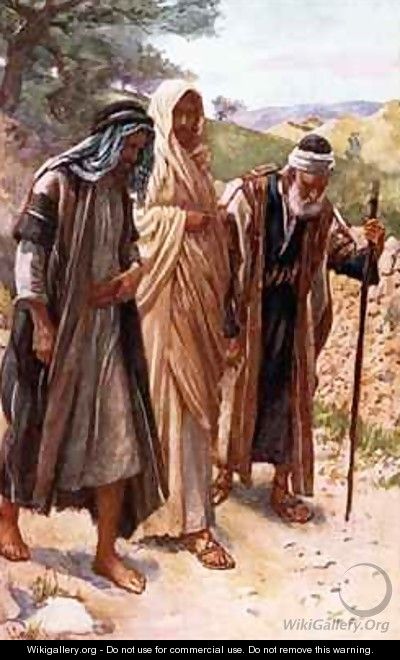
This statement comes from the conversation between Jesus and the two disciples on the road to Emmaus (read it in its entirety here).  People often overlook this part of the conversation in a rush to focus on other aspects of the story like "the good part" where Jesus reveals His identity and everyone gets all excited.  However, we do the story a disservice by neglecting the hoping part because therein lies the reason for the "downcast" faces, and, in a way, the reason they were so excited after the reveal.  They misunderstood the reality of Jesus' mission, but why?

These disciples, along with most of the Jewish people at that time, which, sadly, included the twelve, thought that the Messiah was to come and deliver the nation of Israel from Roman bondage so that they could have the easy life like back in the good old days of David and Solomon.  Despite Jesus' many statements regarding the true nature of "the kingdom of heaven", and His refusal to be crowned as an earthly king, they couldn't rid themselves of the idea that He "was going to redeem Israel", and set up an earthly kingdom.  Sadly, that concept, and ones similar to it, still hold sway among many of the current professed followers of Christ.

One modern departure from Jesus' true mission on earth exists in "prosperity theology" which promotes the belief  that all one needs to do to receive anything is "name it and claim it".  Adherents to this belief system use texts from the Bible as a means to receive anything from good health to a new house.  Interesting thoughts coming from professed followers of one who was essentially homeless, and spoke of riches as a hindrance to entering God's kingdom after telling a rich man to sell all of his possessions.

A more subtle, and therefore more dangerous, variation on this theme also exists.  That being the concept that the life of a Christian should be for the most part, free from problems and sacrifice.  This view continues despite statements from Jesus to the contrary like the one found in Luke 9:23-24 which states that His true followers "must take up their cross daily."  Apparently many of his followers today suffer from the same tendency towards selective hearing as did His disciples back then.  I say this because prior to making that statement, He told His disciples, "The Son of Man must suffer many things and be rejected by the elders, the chief priests and the teachers of the law, and he must be killed and on the third day be raised to life." (v. 22)  It doesn't get much plainer than that, yet not long after hearing that statement, we find the two disciples walking to Emmaus all downcast and such, saying "The chief priests and our rulers handed him over to be sentenced to death, and they crucified him; but we had hoped . . ."

In short, we don't receive God power in our lives because we look for His power to eliminate our problems (something He never said He would do) instead of to help us through them (something He often said He would do).

So if you start sensing the lack of God's power in your life, you should stop and ask yourself, "Am I looking for the right kind?"