In this documentary Daniel Jonah Goldhagen probes the how and why of genocide, and more importantly what should be done to stop it.
I logged into my youtube account a couple days ago and someone I forgot that I was connected with had recommended this documentary therefore making a link to it appear on my home page. The timing of this was quite interesting because recently I have been thinking a lot about genocide, discrimination, etc. I found this video to be both fascinating yet difficult to watch. Before watching be prepared to go through a wide spectrum of emotions. Here it is. Feel free to share your responses in the comment section.
Showing posts with label Jews. Show all posts
Showing posts with label Jews. Show all posts
Thursday, June 28, 2012


Tuesday, June 12, 2012
[Book Review] Man's Search for Meaning by Viktor E. Frankl
 |
| Courtesy bn.com |
For my birthday I received a gift card for a book store (yes, they still exist) and as I was perusing their website I discovered Man's Search for Meaning by Viktor E. Frankl. The paperback version was quite affordable, so I ordered it along with some other books so that I would not have money left over on my card. My wife, daughter and I recently went on a trip that involved a lot of flying, so I brought it along with some other books so that I could make good use of my time. I ended up completing the entire book on that trip and highly recommend it.
Frankl, a Jewish psychiatrist who survived the concentration camps of WWII, describes in the first part of the book what goes through the head of those who found themselves on the wrong side of Hitler's final solution. His personal involvement and active mind gives the reader a unique perspective of what happened on the inside. He didn't seek to shock people with stories of brutality and violence, but rather showed how that one can maintain their humanity in such a dehumanizing situation.
The second part of the book dealt with his method of psychotherapy called logotherapy. Merriam-Webster defines logotherapy in this way.
"a highly directive existential psychotherapy that emphasizes the importance of meaning in the patient's life especially as gained through spiritual values"In contrast to the Freudian method which places most of the emphasis on what has happened in the past affects your present choices, Frankl focuses primarily on how one's present choices affect what happens in the future. When reading this part I would recommend taking frequent breaks, or at least not reading it when you are tired (like I did) because some aspects of his therapy take some effort to process.
I would recommend this to anyone, especially to history buffs who want more than simply names and dates, and to those dealing with difficult situations.
Monday, September 26, 2011
Losing Your Balance
 |
| Photo credit: Melinda Sue Gordon/Sony Pictures |
Recently as I drove to meet my wife for lunch, I heard a familiar voice on the radio. After listening for a few minutes I remembered that the voice belonged to the American actor Brad Pitt.
In the interview, being conducted by NPR's Terry Gross, Mr. Pitt recalled how Christianity made an impact on his early life, but also how he ultimately went away from it. He said that there were "many other reasons" for his departure, but one of them that he chose to highlight caught my attention because it resonated with some of my experience with Christianity, and maybe it will resonate with you as well. The reason can be explained in one word, exclusiveness.
The Balancing Act
Many balancing acts exist in Christianity, a key one being the balance between exclusiveness (being separate) and inclusiveness (being inviting). The Bible speaks many times of the need for a distinction between believers and nonbelievers. We read in the Old Testament section of the Bible where God and His prophets repeatedly tell the nation of Israel how and why it needs to be separate from the surrounding nations and their false systems of worship.
We also see the separation in the New Testament in many of the teachings of Jesus especially in the parables recorded in Matthew 25 (foolish vs. wise virgins, resourceful vs. lazy servants, sheep vs. goats). The apostle Paul spoke of separating from those who did not believe the truth; especially from those who had a superficial theology (as we will look at later in this post). So the Bible states that a time and place exists for exclusivity, but what happens when this exclusiveness becomes unbalanced?
Why Don't They Get To Go To Heaven Then?
You have people asking questions like that one. This question came from a young Brad Pitt as he struggled with Christianity. The full quotation goes as follows.
"I was very curious about the world even at a young age, and I don't know at what point I became aware that other cultures believed in different religions, and my question was, 'Well, why don't they get to go to heaven then?' And the answer was always, 'Well, everyone gets a chance — meaning at the word of God as it was described to me then. And that didn't sit well with me then."Many people have asked that question or at least have had a sense of uneasiness about the subject. That group included me, at least until I discovered this passage in the book of Romans.
"For merely listening to the law doesn’t make us right with God. It is obeying the law that makes us right in his sight. Even Gentiles, who do not have God’s written law, show that they know his law when they instinctively obey it, even without having heard it. They demonstrate that God’s law is written in their hearts, for their own conscience and thoughts either accuse them or tell them they are doing right. And this is the message I proclaim—that the day is coming when God, through Christ Jesus, will judge everyone’s secret life." Romans 2-13-16 (NLT)In this passage, the apostle Paul highlighted this concept as a way of contrasting the behavior of apparent outsiders (the Gentiles) with the proclaimed insiders (the Jews). Key thoughts being that the Gentiles did not have to hear the law to fulfill its requirements, and that God will judge people by how they live, not by what they have heard. So if such relatively plain texts exist then why do we still have the exclusive/inclusive argument, are we neglecting the root of the problem?
The Root of the Problem
Behind an imbalanced view of the exclusive/inclusive concept, a much deeper one exists; an incomplete picture of God. Why do people have an incomplete picture? They get it from His professed followers. Followers of an inviting God often use religion as a barrier between God and those who want to come to Him. They like things the way they are, and don't want any "sinners" to interfere with life as usual. The very same problem that the Roman believers had centuries ago continues today with similar results, people hungering for something more are left feeling empty and isolated. So how do we solve such a problem?
Solving the Problem
To paraphrase a popular saying, we need to be the change that we want to see in the world. If we want a more balanced Christianity, we must ourselves be more balanced. If we want Christianity to be more inviting, we need to be more inviting. If we want people to have a complete picture of God, then we need to have one ourselves. All this only comes from having a deeper relationship with God.
What incomplete picture of God did you once have or continue to have? Share in the comments section.
Sunday, August 14, 2011
Featured Post: Corporate Identity and God's Blessing
This featured post comes from Ted N. C. Wilson, president of the Seventh-day Adventist world church via the Adventist News Network.
Luke tells us twice that the disciples were of one accord as they prepared for the outpouring of the early rain (Acts 1:14; 2:1). The fact that he would mention it twice suggests that unity within the church is a very important step in preparation for the outpouring of the Holy Spirit. There is an aspect to unity presented throughout Scripture that is seldom recognized or addressed in our church -- the role of corporate identity.
First of all, look at an example of corporate identification and then at two aspects of this phenomenon, which are crucial in the preparation for the latter rain:
First, the example: God made it absolutely clear that the Israelites were not to take any spoils for themselves in Jericho's fall and that the silver, gold, and the bronze and iron vessels were consecrated to the Lord (Joshua 6:18, 19). But Achan stole 200 shekels of silver, a wedge of gold and a Babylonian garment (Joshua 7:21). God's anger burned against Israel, and in the next military engagement, Israel lost 36 men and suffered a shameful defeat. When Joshua cried out, "Why, Lord?" the answer was short and to the point: "Israel has sinned" (Joshua 7:11). The whole nation suffered and men lost their lives because one Israelite disobeyed -- corporate identity.
Now, two illustrations that impact directly upon our plea for the latter rain:
First, when the 12 spies returned to give their report about the promised land, Caleb and Joshua were positive and said, "Let us go up at once and take possession, for we are well able to overcome it" (Number 13:30). However, the 10 spies said they could not take the land because there were giants in it and they felt like grasshoppers. The nation believed the 10 and turned against their leaders who were positive that God would fulfill His promise and give the land to them. God's response? Back into the wilderness for 40 years. Moses, Aaron, Caleb, Joshua, and those who supported them had to return to the wilderness because of those who refused to believe God's Word -- corporate identity.
The second illustration takes us to the time of Jesus. Now the roles are reversed. The common people of Israel were flocking to see and hear Jesus. They were bringing their sick to be healed. There was a growing belief among them that Jesus was the promised Messiah but not so among the leaders. They were jealous of Him and plotted His death. During His trial, Pilate asked, "Shall I crucify your King?" The chief priests responded, "We have no king but Caesar" (John 19:15).
Concerning the priests' attitude, Ellen White says, "Thus by choosing a heathen ruler, the Jewish nation had withdrawn from the theocracy. They had rejected God as their king. Henceforth, they had no deliverer. They had no king but Caesar. To this the priests and teachers had led the people. For this, with the fearful results that followed, they were responsible. A nation's sin and a nation's ruin were due to the religious leaders" (DA, pp. 737-738) -- corporate identity.
In the first illustration the leaders suffered because of the rebellion of the people. In the second illustration the people suffered because of the rebellion of the leaders. God deals with us individually when it comes to our own salvation. But God deals with His people as a corporate group when it comes to carrying out His instructions for the advancement of His work.
What is the lesson to be learned?
God deals with His church today as a corporate body. If we are to receive the latter rain power of the Holy Spirit today, the body and the leadership must be on the same page. God has been ready for years to give His people the latter rain. He has been waiting for us to get ourselves together. If we would only press together in seeking the promised power, pray for each other and stand united, shoulder to shoulder, the power would be given, the work would be finished quickly and we would enter the kingdom soon. It will happen and the glory will be given to God alone.
Commentary: Corporate identity and God's blessing
First of all, look at an example of corporate identification and then at two aspects of this phenomenon, which are crucial in the preparation for the latter rain:
First, the example: God made it absolutely clear that the Israelites were not to take any spoils for themselves in Jericho's fall and that the silver, gold, and the bronze and iron vessels were consecrated to the Lord (Joshua 6:18, 19). But Achan stole 200 shekels of silver, a wedge of gold and a Babylonian garment (Joshua 7:21). God's anger burned against Israel, and in the next military engagement, Israel lost 36 men and suffered a shameful defeat. When Joshua cried out, "Why, Lord?" the answer was short and to the point: "Israel has sinned" (Joshua 7:11). The whole nation suffered and men lost their lives because one Israelite disobeyed -- corporate identity.
Now, two illustrations that impact directly upon our plea for the latter rain:
First, when the 12 spies returned to give their report about the promised land, Caleb and Joshua were positive and said, "Let us go up at once and take possession, for we are well able to overcome it" (Number 13:30). However, the 10 spies said they could not take the land because there were giants in it and they felt like grasshoppers. The nation believed the 10 and turned against their leaders who were positive that God would fulfill His promise and give the land to them. God's response? Back into the wilderness for 40 years. Moses, Aaron, Caleb, Joshua, and those who supported them had to return to the wilderness because of those who refused to believe God's Word -- corporate identity.
The second illustration takes us to the time of Jesus. Now the roles are reversed. The common people of Israel were flocking to see and hear Jesus. They were bringing their sick to be healed. There was a growing belief among them that Jesus was the promised Messiah but not so among the leaders. They were jealous of Him and plotted His death. During His trial, Pilate asked, "Shall I crucify your King?" The chief priests responded, "We have no king but Caesar" (John 19:15).
Concerning the priests' attitude, Ellen White says, "Thus by choosing a heathen ruler, the Jewish nation had withdrawn from the theocracy. They had rejected God as their king. Henceforth, they had no deliverer. They had no king but Caesar. To this the priests and teachers had led the people. For this, with the fearful results that followed, they were responsible. A nation's sin and a nation's ruin were due to the religious leaders" (DA, pp. 737-738) -- corporate identity.
In the first illustration the leaders suffered because of the rebellion of the people. In the second illustration the people suffered because of the rebellion of the leaders. God deals with us individually when it comes to our own salvation. But God deals with His people as a corporate group when it comes to carrying out His instructions for the advancement of His work.
What is the lesson to be learned?
God deals with His church today as a corporate body. If we are to receive the latter rain power of the Holy Spirit today, the body and the leadership must be on the same page. God has been ready for years to give His people the latter rain. He has been waiting for us to get ourselves together. If we would only press together in seeking the promised power, pray for each other and stand united, shoulder to shoulder, the power would be given, the work would be finished quickly and we would enter the kingdom soon. It will happen and the glory will be given to God alone.
Tuesday, July 12, 2011
Hoping but Not Receiving
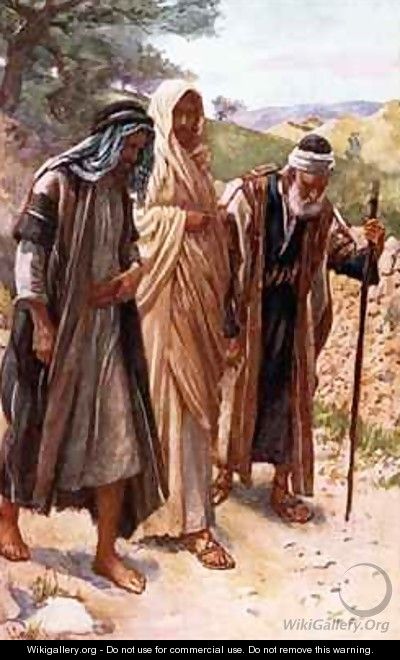
The chief priests and our rulers handed him over to be sentenced to death, and they crucified him; but we had hoped that he was the one who was going to redeem Israel. Luke 24:20-21a
This statement comes from the conversation between Jesus and the two disciples on the road to Emmaus (read it in its entirety here). People often overlook this part of the conversation in a rush to focus on other aspects of the story like "the good part" where Jesus reveals His identity and everyone gets all excited. However, we do the story a disservice by neglecting the hoping part because therein lies the reason for the "downcast" faces, and, in a way, the reason they were so excited after the reveal. They misunderstood the reality of Jesus' mission, but why?
These disciples, along with most of the Jewish people at that time, which, sadly, included the twelve, thought that the Messiah was to come and deliver the nation of Israel from Roman bondage so that they could have the easy life like back in the good old days of David and Solomon. Despite Jesus' many statements regarding the true nature of "the kingdom of heaven", and His refusal to be crowned as an earthly king, they couldn't rid themselves of the idea that He "was going to redeem Israel", and set up an earthly kingdom. Sadly, that concept, and ones similar to it, still hold sway among many of the current professed followers of Christ.
One modern departure from Jesus' true mission on earth exists in "prosperity theology" which promotes the belief that all one needs to do to receive anything is "name it and claim it". Adherents to this belief system use texts from the Bible as a means to receive anything from good health to a new house. Interesting thoughts coming from professed followers of one who was essentially homeless, and spoke of riches as a hindrance to entering God's kingdom after telling a rich man to sell all of his possessions.
A more subtle, and therefore more dangerous, variation on this theme also exists. That being the concept that the life of a Christian should be for the most part, free from problems and sacrifice. This view continues despite statements from Jesus to the contrary like the one found in Luke 9:23-24 which states that His true followers "must take up their cross daily." Apparently many of his followers today suffer from the same tendency towards selective hearing as did His disciples back then. I say this because prior to making that statement, He told His disciples, "The Son of Man must suffer many things and be rejected by the elders, the chief priests and the teachers of the law, and he must be killed and on the third day be raised to life." (v. 22) It doesn't get much plainer than that, yet not long after hearing that statement, we find the two disciples walking to Emmaus all downcast and such, saying "The chief priests and our rulers handed him over to be sentenced to death, and they crucified him; but we had hoped . . ."
In short, we don't receive God power in our lives because we look for His power to eliminate our problems (something He never said He would do) instead of to help us through them (something He often said He would do).
So if you start sensing the lack of God's power in your life, you should stop and ask yourself, "Am I looking for the right kind?"
Monday, June 13, 2011
Of Temples and Churches
 |
| Picture courtesy thejewishmuseum.org |
My recent reading of my daily Bible reading plan has brought me to the part of the Bible that depicts the provisions for, and the building of, Solomon's temple (which can be found in 1 Kings 5-8). Reading this account got me thinking again about the concept of how to build places of worship. For a long while I have often thought about awe-inspiring places of worship only in the context of medieval cathedrals, but as I am writing this, thoughts of other buildings come to mind: places such as Angkor Wat in Cambodia, the Parthenon in Greece, or the Dome of the Rock in Israel. Regardless of who built them, and for what deity (or deities) they were built, they all have something in common, they all sought to give humanity a taste of the divine.
Solomon's temple certainly sought to inspire those who entered with the greatness of God. The elements that struck me was the pair of golden angel statues in the Most Holy Place of the temple. These statues were about 15 ft (4.5 m) tall, and each had a wingspan which was also 15 ft. To give it some perspective, that is the same width of the average two-car garage in the U.S. Now picture these statues standing side-by-side as you enter the room with a ceiling approximately 30 ft. (9 m) tall, and be sure to note that these angels were overlaid with gold. Gold and bronze were used extensively throughout the temple complex, as well as polished stone and various types of wood.
Now how does one translate such impressive display to modern Christianity? Now I am not advocating that Christians should model their churches after such a pattern. By doing so, we could set up an obstacle between people and God. Those who are not Christians could see us as trying to show off in a world that so many people are struggling simply to survive, or as in the case of ancient Israel, the believers could become so focused on the structure as to lose sight for Whom it was built to honor. In the same way, we should not go so far the other way so that our churches would be shabbily constructed that people would wonder if it would be safer to worship outside. Hence the tension that is Christianity.
In a more figurative sense, the Bible states that believers are "temples of the Holy Spirit" (1 Corinthians 6:19). We then have to stop and think, "What kind of temple am I? Am I one that seeks to draw attention to myself rather than God? Am I so 'shabbily constructed' in the way I act and talk that people wonder if it would be better to leave me alone?" The only true solution to these questions is the Lord Himself. As Solomon himself wrote in Psalm 127, "Unless the LORD builds the house, the builders labor in vain."
Monday, May 9, 2011
The Good Old Days?
In these days in which people's rights seem up for grabs there is a tendency to wish we could go back to the good old days when people had more freedom to live as they chose to live. However, upon further research I have discovered that people's freedoms have been eroding away for quite some time.
Some time ago I picked up a book at a Christian book store entitled The Rights of the People, a book on the subject of religious liberty written in the late nineteenth century and reprinted in 1998. As I have been making my way through it I have been impressed by the depth of thought of it's author, Alonzo T. Jones.
The most recent chapter I have read is entitled "Religious Right Invaded" in which Jones explains how despite the tireless efforts of the founders of this country to separate religion from government (which he maps out in the previous chapter) that in such areas the nation has gone backwards. He went so far to state that there has been "a counter-revolution". He stated that this counter-revolution was accomplished and consummated in a U.S. Supreme Court decision from February 29, 1892 (for full text of the decision go here).
As is often the case (no pun intended), this decision came into being as a result of a challenge to an existing law. In 1887 Congress passed a law that forbade any alien to come to the U.S. under contract to perform any kind of labor. The reason for this law was that many corporations were going to Europe and finding people to come here and work. The company would pay their way, and because of this they required the laborers to work for next to nothing. This was depreciating the amount Americans could get paid for their labor, so Congress passed a law stating
The Supreme Court stated, "But, beyond all these matters, no purpose of action against religion can be imputed to any legislation, state or national, because this is a religious people. This is historically true." Having made such a statement they then had to back it up, and by so doing started down a very slippery slope. For not only were the people of this nation "religious", but they were also "Christian". Jones stated in a somewhat satirical tone that the people therefore are now all Christians regardless of whether they were Jews or non-believers because the highest court in the land declared them so. He then states that the very absurdity of the suggestion only demonstrates that the court should have nothing to do with such manners. He continues by stating that people are not made religious by law, judicial decision, nor historical precedent, which brings us to the historical "support" the Supreme Court gave to show that the people of the U.S. are indeed a religious people.
Jones stated that the historical reasons given are at best suspect and at worst complete misinterpretations of the original statements. The first historical reasons given were from European nations (i.e. Spain and England). Jones points out that the Spanish rulers (Ferdinand & Isabella) who commissioned Columbus were in fact the same rulers who established the Spanish Inquisition. To say that the language of these rulers has the same meaning as the U.S. Constitution takes quite a bit of stretching of the imagination. The statements regarding the British monarchy would have quite a bit more weight if in fact the U.S. was still under British rule, but it most definitely is not subject to British sovereignty.
There are many other historical reasons given, and Jones takes time to refute them all, but this is beyond the scope of this post. I will however touch on the reason for which Jones saves his strongest language, the ruling declares that the United States Constitution reaffirms the thought that this nation is a religious nation. To this Jones states, "To say it is absurd is not enough, it is simply preposterous." He goes on to write that there is another consideration that magnifies that one, namely the fact that the court leaves out Thomas Jefferson, James Madison, and George Washington from the place where they rightly belong, and drags "Ferdinand, Isabella and Elizabeth into the place where they do not and cannot by any shadow of right belong[.]"
There is much more but Jones sums the entire ruling in this way.
Some time ago I picked up a book at a Christian book store entitled The Rights of the People, a book on the subject of religious liberty written in the late nineteenth century and reprinted in 1998. As I have been making my way through it I have been impressed by the depth of thought of it's author, Alonzo T. Jones.
The most recent chapter I have read is entitled "Religious Right Invaded" in which Jones explains how despite the tireless efforts of the founders of this country to separate religion from government (which he maps out in the previous chapter) that in such areas the nation has gone backwards. He went so far to state that there has been "a counter-revolution". He stated that this counter-revolution was accomplished and consummated in a U.S. Supreme Court decision from February 29, 1892 (for full text of the decision go here).
As is often the case (no pun intended), this decision came into being as a result of a challenge to an existing law. In 1887 Congress passed a law that forbade any alien to come to the U.S. under contract to perform any kind of labor. The reason for this law was that many corporations were going to Europe and finding people to come here and work. The company would pay their way, and because of this they required the laborers to work for next to nothing. This was depreciating the amount Americans could get paid for their labor, so Congress passed a law stating
"Be it enacted by the Senate and House of Representatives of the United States of America in Congress assembled, that from and after the passage of this act it shall be unlawful for any person, company, partnership, or corporation, in any manner whatsoever, to prepay the transportation, or in any way assist or encourage the importation or migration, of any alien or aliens, any foreigner or foreigners, into the United States, its territories, or the District of Columbia under contract or agreement, parol or special, express or implied, made previous to the importation or migration of such alien or aliens, foreigner or foreigners, to perform labor or service of any kind in the United States, its territories, or the District of Columbia."A problem arose when Trinity Church Corporation employed a preacher in England to come to the States and preach for them. This act was seen as a violation of the aforementioned law and the U.S District Attorney prosecuted the church. The U.S. Circuit Court decided that the church was guilty. Naturally, there was an appeal taken to the Supreme Court. The Supreme Court reversed the decision on the grounds that the term "laborer" or "laborer or service" was intended to refer to manual labor, not a professional service. All the Supreme Court had to do was reverse the decision on those grounds, but they went above and beyond what was necessary, and that is where all the troubles began.
The Supreme Court stated, "But, beyond all these matters, no purpose of action against religion can be imputed to any legislation, state or national, because this is a religious people. This is historically true." Having made such a statement they then had to back it up, and by so doing started down a very slippery slope. For not only were the people of this nation "religious", but they were also "Christian". Jones stated in a somewhat satirical tone that the people therefore are now all Christians regardless of whether they were Jews or non-believers because the highest court in the land declared them so. He then states that the very absurdity of the suggestion only demonstrates that the court should have nothing to do with such manners. He continues by stating that people are not made religious by law, judicial decision, nor historical precedent, which brings us to the historical "support" the Supreme Court gave to show that the people of the U.S. are indeed a religious people.
Jones stated that the historical reasons given are at best suspect and at worst complete misinterpretations of the original statements. The first historical reasons given were from European nations (i.e. Spain and England). Jones points out that the Spanish rulers (Ferdinand & Isabella) who commissioned Columbus were in fact the same rulers who established the Spanish Inquisition. To say that the language of these rulers has the same meaning as the U.S. Constitution takes quite a bit of stretching of the imagination. The statements regarding the British monarchy would have quite a bit more weight if in fact the U.S. was still under British rule, but it most definitely is not subject to British sovereignty.
There are many other historical reasons given, and Jones takes time to refute them all, but this is beyond the scope of this post. I will however touch on the reason for which Jones saves his strongest language, the ruling declares that the United States Constitution reaffirms the thought that this nation is a religious nation. To this Jones states, "To say it is absurd is not enough, it is simply preposterous." He goes on to write that there is another consideration that magnifies that one, namely the fact that the court leaves out Thomas Jefferson, James Madison, and George Washington from the place where they rightly belong, and drags "Ferdinand, Isabella and Elizabeth into the place where they do not and cannot by any shadow of right belong[.]"
There is much more but Jones sums the entire ruling in this way.
"The United States . . . was turned from the 'new order of things' to which it was committed by our revolutionary fathers, and to which it stands pledged by the great seal of the government itself, and was thrown into the evil tide of the old order of things. And thus this enlightened nation, the example and glory of the world, was caused to assume the place and the prerogatives of the governments of the Middle Ages in embodying in law the dogmas and definitions of the theologians, and executing the arbitrary and despotic will of the church."So while it is nice to wistfully look back at times gone by and wish that things were like they used to be, it is important to realize that even in the good old days the situation was not as rosy as we thought it was.
Friday, July 23, 2010
Paul Before Nero
We must never give up witnessing to others for we never know what may come from it.
As I mentioned in a previous post, the evil Jewish leaders had accused Paul of burning Rome. Now in this chapter, Paul is brought before the emperor Nero to answer for his so-called crimes. It was customary in the Greek and Roman culture to have an advocate speak for the accused much like a defense lawyer. This advocated need not be a lawyer, simply someone eloquent who might convince the tribunal to release the prisoner or at least mitigate the punishment. Paul had no such advocate. For one reason or another, no one came forward to defend Paul. So Paul had to speak for himself. However he was not alone, for God was with him.
A great crowd had gathered to see the proceedings, for apparently such things were as interesting to people back then as they are now. Paul used this for the advantage of the gospel. His whole being radiated peace to the surprise of many of the onlookers, and he spoke with such eloquence that many people were led to believe in Jesus and change their ways. Even Nero, whose debauchery was repulsive to even many of the heathens of his day was pricked in the heart, and for a brief moment he almost surrender his heart to God. Sadly, that moment was simply just a moment, and when the prison door shut behind Paul once again, the door of probation was shut forever behind Nero.
Too many people if put in a similar situation would have said "What's the use? These people are too far gone, it pointless to even bother. I'm not going to to put pearls in front of swine." Such people do not have the mind of Christ. We must never give up trying to witness to others regardless of how hopeless it seems.
Thursday, July 22, 2010
The Final Arrest
No man, even the apostle Paul, is an island.
Well, those evil Jews were at it again. I really shouldn't be surprised at the lengths these men went through to get rid of Paul, but this surprised me. In this chapter it is written that they accused Paul of setting Rome ablaze. The anti-Christian sentiment was so strong at the time that it didn't take much to make the accusation stick. Paul was arrested, and instead of a nice house, he was put into a gloomy dungeon.
Many of his friends had left the city for one reason or another, and he valued those who stayed that much more. A key person was Luke who "was a great comfort to Paul and enabled him to communicate with his brethren and the world without" (pg. 490). Another friend who stayed was Onesiphorous.
This warmhearted Ephesian did all in his power to lighten the burden of the apostle's imprisonment. His beloved teacher was in bonds for the truth's sake, while he himself went free, and he spared himself no effort to make Paul's lot more bearable. pg. 490We all need each other. Even Jesus wanted the sympathy of His disciples while at Gethsemane. Those who spend their lives in service of others still need to be ministered to once in a while. May we all be more attuned to the needs of others and do our best to fulfill them.
Sunday, July 18, 2010
In Rome
God can make the best out of a bad situation.
In this chapter, we find Paul arriving at Rome. There were a few Christians in the area, and the met him upon his arrival to the Italian coast. The Christians requested that Paul stay with them a week, and this request was granted by the centurion Julius. The soldiers had come to greatly respect Paul, and did everything in their power to accommodate him.
On the eighth day, the prisoners set out to Rome and when they were passing through Appii Forum, about forty miles from Rome. The procession was periodically halted when various believers recognized Paul from his presence at the various towns and cities in which he ministered. The soldiers were a little annoyed at these interruptions, but didn't have the heart to cut them short.
Upon arriving at Rome, Paul was surrendered the captain of the emperor's guard. The positive words of Julius as well as Festus' letter caused Paul to be treated very graciously. Instead of staying in a prison, he was allowed to stay at a house, and although still in chains, he was granted a great deal of freedom.
Paul received many visitors, especially those of the Jewish persuasion, and Paul took this opportunity to share with them the truth regarding his presence there before they could be poisoned by those Jews who hated him so much. The Roman Jews stated that they had not heard anything from these other Jews, and had no bias against him. So, sometime later Paul shared with them the gospel, and how the true knowledge of Christ had led him to be converted.
Paul had been in Rome a long time up to this point with no appearance by his accusers. The malicious designs of those Jews had been so thoroughly thwarted up to this point that they needed quite a bit of time to regroup. God used this delay to the furtherance of the gospel. For the period of two years Paul was able to receive visitors and send out workers to various places to preach the gospel. E. G. White had this to write about this situation.
Thus, while apparently cut off from active labor, Paul exerted a wider and more lasting influence than if he had been free to travel among the churches as in former years. As a prisoner of the Lord, he had a firmer hold upon the affections of his brethren; and his words, written by one under bonds for the sake of Christ, commanded greater attention and respect than they did when he was personally with them. Not until Paul was removed from them, did the believers realize how heavy were the burdens he had borne in their behalf. Heretofore they had largely excused themselves from responsibility and burden bearing because they lacked his wisdom, tact, and indomitable energy; but now, left in their inexperience to learn the lessons they had shunned, they prized his warnings, counsels, and instructions as they had not prized his personal work. And as they learned of his courage and faith during his long imprisonment they were stimulated to greater fidelity and zeal in the cause of Christ. pg 454The chapter continues by going into the background of Paul's letter to Philemon, but I want to stay on this point of how the work was benefited by all the negative circumstances surrounding Paul's Roman experience. We often go through life wondering how anything good can come from the negative circumstances that surround our experience, but we should take this story and let it serve as a reminder that no matter what problems life deals us, God can make the best out of a bad situation.
Thursday, July 15, 2010
"Almost Thou Persuadest Me"
We shouldn't be afraid to witness to those in a higher social status than ourselves.
In this chapter, Paul was not immediately sent to Rome, and this gave him some time to witness to more people in Caesarea. The most prominent person was King Agrippa II, the last in the line of the Herods ("Herod" is not so much a name as a title much like "Caesar" or "Pharaoh"). Festus told Agrippa about Paul, and the king was interested to see the prisoner. E.G. White paints the picture of the contrast between the king and his prisoner.
This got me thinking as to what I would say if I were to have an audience with some of the world leaders of today. Even though many political leaders have done away with much of the pomp and display of the kings of old it can still be an intimidating experience. Yet Paul was not intimidated to the slightest degree. He knew that all of this in reality meant nothing. I think that we need to overcome the concept of seeing people in higher levels differently. I do not mean that we should be rude or impolite, but to simply view people as people regardless of how many times we may have seen them on T.V., magazines, or billboards. If more people would have this attitude that Paul had, the gospel would go out much faster than it is now.
Of course, as in this case, such boldness does not always bear fruit.
In this chapter, Paul was not immediately sent to Rome, and this gave him some time to witness to more people in Caesarea. The most prominent person was King Agrippa II, the last in the line of the Herods ("Herod" is not so much a name as a title much like "Caesar" or "Pharaoh"). Festus told Agrippa about Paul, and the king was interested to see the prisoner. E.G. White paints the picture of the contrast between the king and his prisoner.
In honor of his visitors, Festus had sought to make this an occasion of imposing display. The rich robes of the procurator and his guests, the swords of the soldiers, and the gleaming armor of their commanders, lent brilliancy to the scene.
And now Paul, still manacled, stood before the assembled company. What a contrast was here presented! Agrippa and Bernice possessed power and position, and because of this they were favored by the world. But they were destitute of the traits of character that God esteems. They were transgressors of His law, corrupt in heart and life. Their course of action was abhorred by heaven.
The aged prisoner, chained to his soldier guard, had in his appearance nothing that would lead the world to pay him homage. Yet in this man, apparently without friends or wealth or position, and held a prisoner for his faith in the Son of God, all heaven was interested. Angels were his attendants. Had the glory of one of those shining messengers flashed forth, the pomp and pride of royalty would have paled; king and courtiers would have been stricken to the earth, as were the Roman guards at the sepulcher of Christ. pgs. 434, 435Paul then then took the time to talk about Jesus: His life, death & resurrection. He continued by saying how that he was compelled to witness for Him, and that it was for this reason that the Jews had arrested him.
This got me thinking as to what I would say if I were to have an audience with some of the world leaders of today. Even though many political leaders have done away with much of the pomp and display of the kings of old it can still be an intimidating experience. Yet Paul was not intimidated to the slightest degree. He knew that all of this in reality meant nothing. I think that we need to overcome the concept of seeing people in higher levels differently. I do not mean that we should be rude or impolite, but to simply view people as people regardless of how many times we may have seen them on T.V., magazines, or billboards. If more people would have this attitude that Paul had, the gospel would go out much faster than it is now.
Of course, as in this case, such boldness does not always bear fruit.
Festus, Agrippa, and Bernice might in justice have worn the fetters that bound the apostle. All were guilty of grievous crimes. These offenders had that day heard the offer of salvation through the name of Christ. One, at least, had been almost persuaded to accept the grace and pardon offered. But Agrippa put aside the proffered mercy, refusing to accept the cross of a crucified Redeemer. pg. 438May we all have holy boldness regardless of the outcome.
Wednesday, July 14, 2010
Paul Appeals to Caesar
Sometimes God's workers get more support from nonbelievers than from the church.
This chapter is relatively short, but there is still some key points to highlight. Festus has replaced Felix as the provincial leader, and the Jewish leaders hoped to take advantage of this situation and tried to convince him to have Paul transported back to Jerusalem. Festus declined their request and said that he was going to Caesarea, and that they should go there as well. This was not what they had in mind.
This chapter is relatively short, but there is still some key points to highlight. Festus has replaced Felix as the provincial leader, and the Jewish leaders hoped to take advantage of this situation and tried to convince him to have Paul transported back to Jerusalem. Festus declined their request and said that he was going to Caesarea, and that they should go there as well. This was not what they had in mind.
This was not what the Jews wanted. They had not forgotten their former defeat at Caesarea. In contrast with the calm bearing and forcible arguments of the apostle, their own malignant spirit and baseless accusations would appear in the worst possible light. Again they urged that Paul be brought to Jerusalem for trial, but Festus held firmly to his purpose of giving Paul a fair trial at Caesarea. God in His providence controlled the decision of Festus, that the life of the apostle might be lengthened. pg. 429After hearing the arguments in Caesarea, Festus determined that it was a matter of Jewish law, so he suggested that Paul be transported under Roman guard back to Jerusalem. Paul knew that there was no way he was going to get a fair trial there, so he exercised his right as a Roman citizen.
In answer to the governor's question, Paul said: "I stand at Caesar's judgment seat, where I ought to be judged: to the Jews have I done no wrong, as thou very well knowest. For if I be an offender, or have committed anything worthy of death, I refuse not to die: but if there be none of these things whereof these accuse me, no man may deliver me unto them. I appeal unto Caesar." pg. 430Festus was surprised by this request, but after some deliberation granted it. Now comes the sad part.
Thus it was that once more, because of hatred born of bigotry and self-righteousness, a servant of God was driven to turn for protection to the heathen. It was this same hatred that forced the prophet Elijah to flee for succor to the widow of Sarepta; and that forced the heralds of the gospel to turn from the Jews to proclaim their message to the Gentiles. And this hatred the people of God living in this age have yet to meet. Among many of the professing followers of Christ there is the same pride, formalism, and selfishness, the same spirit of oppression, that held so large a place in the Jewish heart. In the future, men claiming to be Christ's representatives will take a course similar to that followed by the priests and rulers in their treatment of Christ and the apostles. In the great crisis through which they are soon to pass, the faithful servants of God will encounter the same hardness of heart, the same cruel determination, the same unyielding hatred. pg. 430, 431This is doubly sad because of how things went back then, and how things will happen in the future. E.G. White wrote in another place that we will have more to fear from within than from without. She summarizes this chapter by saying,
When the darkness is deepest, the light of a godlike character will shine the brightest. When every other trust fails, then it will be seen who have an abiding trust in Jehovah. And while the enemies of truth are on every side, watching the Lord's servants for evil, God will watch over them for good. He will be to them as the shadow of a great rock in a weary land. pg. 432May we all have godlike characters so that we will be on the right side when the trials come.
Monday, July 12, 2010
Paul a Prisoner
Paul ended up in chains, but it was the Jewish leaders who were truly prisoners.
This chapter details the events that led up to Paul becoming a prisoner. I found this chapter to be quite interesting because the story told here is filled with danger and intrigue, but it was disappointing to read that all these events could have been avoided.
What started these events in motion was that the leaders of the Christian church in Jerusalem were stuck in their old ways of thinking.
E.G. White writes a sobering epitaph for those Jewish leaders.
This chapter details the events that led up to Paul becoming a prisoner. I found this chapter to be quite interesting because the story told here is filled with danger and intrigue, but it was disappointing to read that all these events could have been avoided.
What started these events in motion was that the leaders of the Christian church in Jerusalem were stuck in their old ways of thinking.
In the earlier years of the gospel work among the Gentiles some of the leading brethren at Jerusalem, clinging to former prejudices and habits of thought, had not co-operated heartily with Paul and his associates. In their anxiety to preserve a few meaningless forms and ceremonies, they had lost sight of the blessing that would come to them and to the cause they loved, through an effort to unite in one all parts of the Lord's work. Although desirous of safeguarding the best interests of the Christian church, they had failed to keep step with the advancing providences of God, and in their human wisdom attempted to throw about workers many unnecessary restrictions. Thus there arose a group of men who were unacquainted personally with the changing circumstances and peculiar needs met by laborers in distant fields, yet who insisted that they had the authority to direct their brethren in these fields to follow certain specified methods of labor. They felt as if the work of preaching the gospel should be carried forward in harmony with their opinions. pg. 400I had mentioned in an earlier post about the need for God's workers to adapt there methods to their target audience. These leaders refused to change, and deceived themselves into thinking that their way was the best way to do things.
These men had lost sight of the fact that God is the teacher of His people; that every worker in His cause is to obtain an individual experience in following the divine Leader, not looking to man for direct guidance; that His workers are to be molded and fashioned, not after man's ideas, but after the similitude of the divine. pg. 401The leaders that asked that Paul go through a process in which he should become ceremonially pure so as to not arouse negative feelings among the Jews. Paul wanted so much to reconcile these parties that he went through with this needless process, and it was while he was doing this that things really went awry.
Those who advised Paul to take this step had not fully considered the great peril to which he would thus be exposed. At this season, Jerusalem was filled with worshipers from many lands. As, in fulfillment of the commission given him by God, Paul had borne the gospel to the Gentiles, he had visited many of the world's largest cities, and he was well known to thousands who from foreign parts had come to Jerusalem to attend the feast. Among these were men whose hearts were filled with bitter hatred for Paul, and for him to enter the temple on a public occasion was to risk his life. For several days he passed in and out among the worshipers, apparently unnoticed; but before the close of the specified period, as he was talking with a priest concerning the sacrifices to be offered, he was recognized by some of the Jews from Asia. pg. 406This recognition brought about a flurry of events that included his binding in chains, ministering to the mob, a hearing in front of the Sanhedrin, avoiding forty Jewish assassins, and being transported out of the city by heavy Roman guard.
E.G. White writes a sobering epitaph for those Jewish leaders.
. . . Had the leaders in the church fully surrendered their feeling of bitterness toward the apostle, and accepted him as one specially called of God to bear the gospel to the Gentiles, the Lord would have spared him to them. God had not ordained that Paul's labors should so soon end, but He did not work a miracle to counteract the train of circumstances to which the course of the leaders in the church at Jerusalem had given rise. pg. 417Then she had this to say about us in modern times.
The same spirit is still leading to the same results. A neglect to appreciate and improve the provisions of divine grace has deprived the church of many a blessing. How often would the Lord have prolonged the work of some faithful minister, had his labors been appreciated! But if the church permits the enemy of souls to pervert the understanding, so that they misrepresent and misinterpret the words and acts of the servant of Christ; if they allow themselves to stand in his way and hinder his usefulness, the Lord sometimes removes from them the blessing which He gave. pgs. 417,418Lord help us to appreciate those who sacrifice themselves for Your work.
Sunday, July 11, 2010
Paul's Last Journey to Jerusalem
Those who work for God should not have any fear.
The title of this chapter indicates that most likely it's story comes from near the end of Paul's life because of his willingness to travel it would take a lot for something to be his last journey anywhere. He had high hopes for the work there.
Upon reaching the city of Miletus, he discovered that he had some time before the next ship, and took the time to speak to the believers there. His message there is one all workers of Christ can apply to their lives.
Paul wasn't afraid to point out sin, and he definitely wasn't afraid to suffer for the sake of the gospel. His friends sought to prevent him from going to Jerusalem, but to no avail.
The title of this chapter indicates that most likely it's story comes from near the end of Paul's life because of his willingness to travel it would take a lot for something to be his last journey anywhere. He had high hopes for the work there.
Paul greatly desired to reach Jerusalem before the Passover as he would thus have an opportunity to meet those who should come from all parts of the world to attend the feast. Ever he cherished the hope that in some way he might be instrumental in removing the prejudice of his unbelieving countrymen, so that they might be led to accept the precious light of the gospel. He also desired to meet the church at Jerusalem and bear to them the gifts sent by the Gentile churches to the poor brethren in Judea. And by this visit he hoped to bring about a firmer union between the Jewish and the Gentile converts to the faith. pg. 389However, he soon found out that such hopes would be quite difficult to achieve.
Having completed his work at Corinth, he determined to sail directly for one of the ports on the coast of Palestine. All the arrangements had been made, and he was about to step on board the ship, when he was told of a plot laid by the Jews to take his life. IbidTherefore, he decided to take his time in getting to Jerusalem, and made what turned out to be a farewell tour.
Upon reaching the city of Miletus, he discovered that he had some time before the next ship, and took the time to speak to the believers there. His message there is one all workers of Christ can apply to their lives.
"Wherefore I take you to record this day, that I am pure from the blood of all men. For I have not shunned to declare unto you all the counsel of God." No fear of giving offense, no desire for friendship or applause, could lead Paul to withhold the words that God had given him for their instruction, warning, or correction. From His servants today God requires fearlessness in preaching the word and in carrying out its precepts. The minister of Christ is not to present to the people only those truths that are the most pleasing, while he withholds others that might cause them pain. He should watch with deep solicitude the development of character. If he sees that any of his flock are cherishing sin he must as a faithful shepherd give them from God's word the instruction that is applicable to their case. Should he permit them in their self-confidence to go on unwarned, he would be held responsible for their souls. The pastor who fulfills his high commission must give his people faithful instruction on every point of the Christian faith, showing them what they must be and do in order to stand perfect in the day of God. He only who is a faithful teacher of the truth will at the close of his work be able to say with Paul, "I am pure from the blood of all men." pgs. 393, 394All those who work for God, not only just pastors, should seek to give a complete message. Too many times, I hear about ministers who only give messages that people like to hear. Messages that promise prosperity and peace without any real sacrifice on their part. I am reminded of an interview from some years ago between a prominent preacher of this kind of gospel and Larry King. Note the following exchange.
OSTEEN: I have thoughts. I just, you know, I don't think that a same-sex marriage is the way God intended it to be. I don't think abortion is the best. I think there are other, you know, a better way to live your life. But I'm not going to condemn those people. I tell them all the time our church is open for everybody.Paul, in contrast, did not mince words in regards to sin as anyone who even just skims his writings can discover. He wasn't afraid to call sin by it's right name, but always did it with love and the guidance of the Holy Spirit.
KING: You don't call them sinners?
OSTEEN: I don't.
KING: Is that a word you don't use?
OSTEEN: I don't use it. I never thought about it. But I probably don't. But most people already know what they're doing wrong. When I get them to church I want to tell them that you can change. There can be a difference in your life. So I don't go down the road of condemning.
Paul wasn't afraid to point out sin, and he definitely wasn't afraid to suffer for the sake of the gospel. His friends sought to prevent him from going to Jerusalem, but to no avail.
"When we heard these things," Luke continues, "both we, and they of that place, besought him not to go up to Jerusalem." But Paul would not swerve from the path of duty. He would follow Christ if need be to prison and to death. "What mean ye to weep and to break mine heart?" he exclaimed; "for I am ready not to be bound only, but also to die at Jerusalem for the name of the Lord Jesus." Seeing that they caused him pain without changing his purpose, the brethren ceased their importunity, saying only, "The will of the Lord be done." pg. 397Lord, help me to be as fearless in my Christian duty as Paul was.
Thursday, July 8, 2010
Salvation to the Jews
The gospel of Christ is not simply for the Gentiles, but for the Jews as well.
This chapter deals with Paul's letter to the Romans, and more specifically, his burden for the Jewish people.
This chapter deals with Paul's letter to the Romans, and more specifically, his burden for the Jewish people.
In this letter Paul gave free expression to his burden in behalf of the Jews. Ever since his conversion, he had longed to help his Jewish brethren to gain a clear understanding of the gospel message. "My heart's desire and prayer to God for Israel is," he declared, "that they might be saved." pg. 374I was taught as I was growing up that the stoning of Stephen in Acts 7:54-60 marked the end of the Jewish nation as God's chosen people, and that this event marked the end of the Jewish era, and the beginning of the Christian era. Later on in life I became uncomfortable with that concept partially because whenever it was explained to me, those explaining it walked a conceptual tightrope saying that God rejected the nation, but didn't reject the people. I wondered how that was possible considering the nation was comprised by the people. Stephen is not mentioned in this chapter, but E.G. White does have this to say.
Through unbelief and the rejection of Heaven's purpose for her, Israel as a nation had lost her connection with God. But the branches that had been separated from the parent stock God was able to reunite with the true stock of Israel --the remnant who had remained true to the God of their fathers. "They also," the apostle declares of these broken branches, "if they abide not still in unbelief, shall be grafted in: for God is able to graft them in again." "If thou," he writes to the Gentiles, "wert cut out of the olive tree which is wild by nature, and wert grafted contrary to nature into a good olive tree: how much more shall these, which be the natural branches, be grafted into their own olive tree? For I would not, brethren, that ye should be ignorant of this mystery, lest ye should be wise in your own conceits; that blindness in part is happened to Israel, until the fullness of the Gentiles be come in. pgs. 378,379God has always had a remnant, something that is evident in the fact that many of the early Christian believers came from Jewish backgrounds.
At the time of the Saviour's advent there were faithful men and women who had received with gladness the message of John the Baptist, and had thus been led to study anew the prophecies concerning the Messiah. When the early Christian church was founded, it was composed of these faithful Jews who recognized Jesus of Nazareth as the one for whose advent they had been longing. It is to this remnant that Paul refers when he writes, "If the first fruit be holy, the lump is also holy: and if the root be holy, so are the branches." pg. 377There is more to the chapter, but the point I want to make is similar to the one she made. We are to work for the Jewish people just as much as for Gentiles.
Among the Jews are some who, like Saul of Tarsus, are mighty in the Scriptures, and these will proclaim with wonderful power the immutability of the law of God. The God of Israel will bring this to pass in our day. His arm is not shortened that it cannot save. As His servants labor in faith for those who have long been neglected and despised, His salvation will be revealed. pg. 381
Subscribe to:
Posts (Atom)